
Fit and sizing
Your Pattern Size Starts with Measurements, Not a Clothing Label
A practical introduction to body measurements, finished garment measurements and choosing a size for the pattern in front of you.
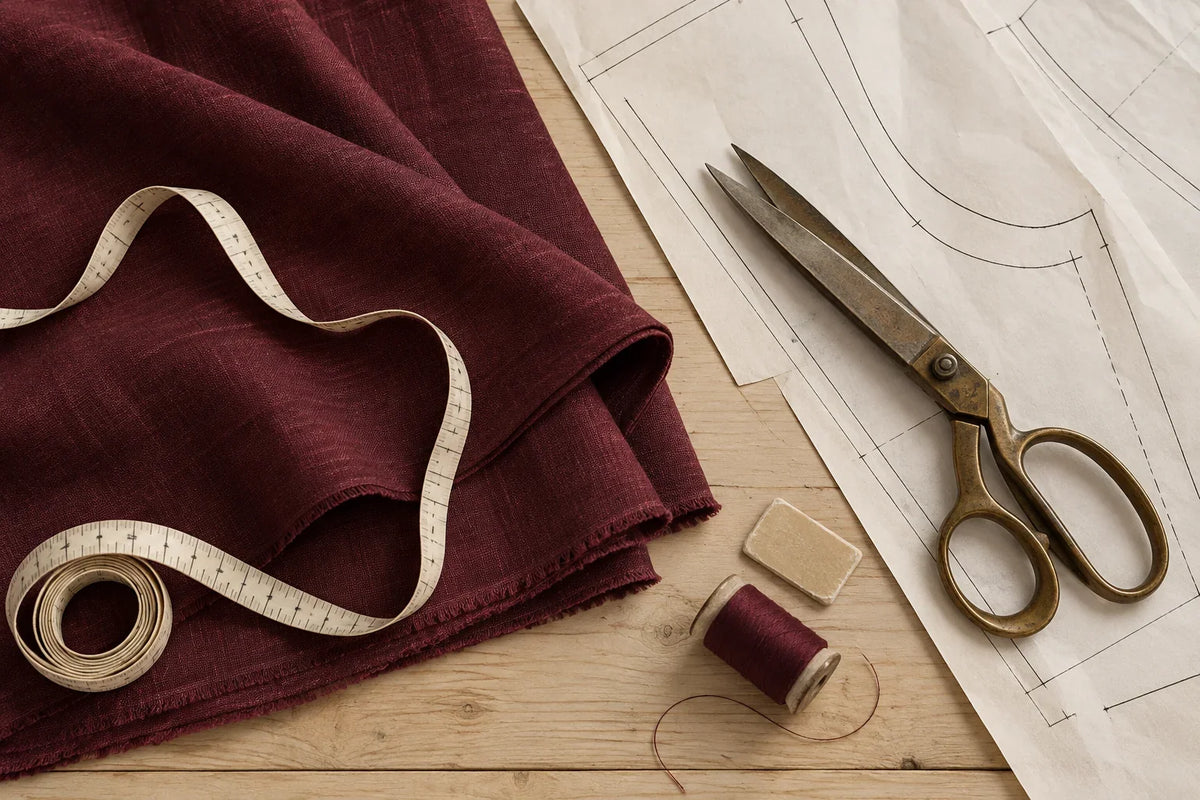
The number on a shop-bought garment is a familiar reference, but it is not a reliable shortcut when choosing a sewing pattern size. Clothing brands and pattern companies can use different sizing systems. Start with your current measurements and the chart supplied for the design you want to make.
Make a fresh set of notes
Read the pattern's measuring guidance before reaching for the tape. Use the measurements it asks for; not every design needs the same information. Record the date and units with your notes so you can compare like with like later.
For common body measurements, use a flexible tape over the undergarments you normally wear. Keep the tape comfortably snug rather than pulling it tight. A mirror or another person's help can make it easier to keep the tape level. Follow the measurement locations described by the pattern instead of guessing from the name alone.
Use the chart for this pattern
Compare your notes with the body measurement chart included for that specific design. A size that worked in one pattern is useful background, but it does not replace checking a different pattern's chart. The same applies when sewing for someone else: use their current measurements and the appropriate chart.
If different measurements point to different sizes, write that down rather than immediately choosing the smallest or largest number. Read the design's size-selection and fitting notes. Where those instructions do not answer the question, ask for guidance before cutting.
Understand the second set of measurements
Body measurements describe the person; finished garment measurements describe the sewn item. Where both are provided, compare them to understand the space built into the design. Ease is the difference between body and garment measurements, and its amount depends on the intended style and fabric.
Do not expect a loose garment and a close-fitting garment to have the same measurements. Stretch designs may use different ease from woven designs. Follow the pattern's guidance rather than applying one fixed allowance to every project.
Give the fit a chance to speak
For an unfamiliar or closely fitted design, a test garment in a suitable inexpensive fabric can help you assess the fit before using special fabric. Keep notes about what you changed and why. Avoid making several unrelated changes at once when you are still learning how the original pattern fits.
Choosing a size is preparation, not a judgement about your body. The useful number is the one that helps you make the garment you intended.
Technical references: Simplicity: measurement guide and choosing a pattern size.